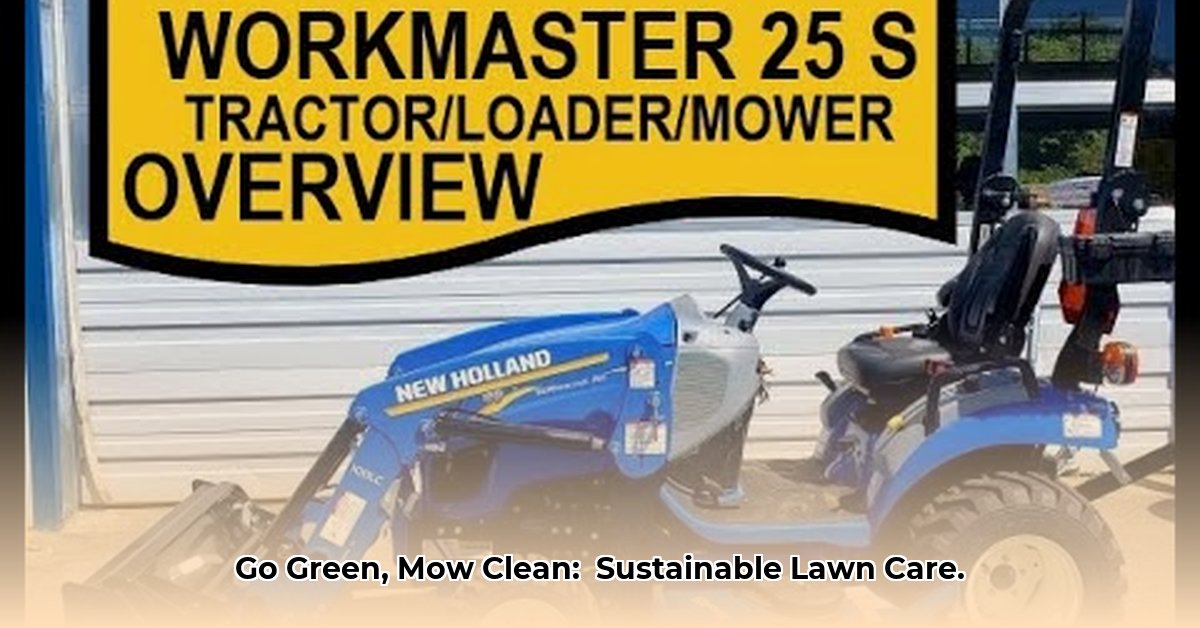
Choosing the right tractor is a significant investment for any sustainable farm. This guide compares New Holland's WORKMASTER™ and Boomer™ lines, helping you select the best model for your needs and budget. We'll cover essential factors, financing options, maintenance tips, and real-world applications to ensure you make an informed decision. For more detailed specifications, check out this helpful resource: New Holland Tractor Info.
Getting Started: WORKMASTER™ or Boomer™?
The choice between a WORKMASTER™ and Boomer™ depends largely on your operation's scale and your task list. Think of the WORKMASTER™ as a reliable pickup truck – perfect for smaller properties and simpler tasks like mowing and light tilling. It's cost-effective and easy to maintain, ideal for beginners and those on a tighter budget. The Boomer™, on the other hand, is more like a powerful SUV, offering greater horsepower, advanced features, and enhanced comfort for larger properties and more demanding tasks like heavy-duty tilling and hauling.
Key Factors to Consider
Before purchasing, consider these crucial factors:
Acreage: A small hobby farm thrives with a WORKMASTER™, while a larger operation might necessitate a Boomer™'s increased capabilities.
Tasks: Basic mowing is easily handled by both, but heavier tasks like tilling or using specialized attachments often require a Boomer™'s additional power.
Budget: Set a realistic budget before shopping, considering the cost of necessary attachments.
Financing: Explore available financing options to potentially make a higher-end model more accessible.
Expanding Capabilities: Attachments and Implements
Both WORKMASTER™ and Boomer™ tractors offer a range of attachments to enhance their versatility. Consider:
- Front Loaders: Ideal for material handling.
- Mid-Mount Mowers: Provide precise and efficient mowing.
- Backhoes: Useful for digging, but add considerable weight, requiring a more robust tractor model.
- Snow Blowers: Essential for snow removal in colder climates.
Choosing the right attachments is crucial for maximizing your tractor's utility. Plan your tasks to determine essential attachments.
Maintaining Your Investment: Essential Maintenance
Proper maintenance is crucial to prolong your tractor's lifespan. Prioritize:
Regular Servicing: Adhere to the manufacturer's recommended service schedule.
Cleaning: Regularly clean mud and debris to prevent corrosion and damage.
Storage: Store your tractor in a dry, sheltered area to protect it from the elements.
Real-World Applications: Case Studies
Consider these scenarios:
Scenario 1: A small-scale organic farmer uses a WORKMASTER™ for efficient vegetable garden tilling, benefiting from its affordability and ease of use.
Scenario 2: A landscaping company utilizes a Boomer™ for managing a large park, leveraging its power and versatility for heavy-duty tasks.
Choosing the Best Compact Tractor: Budget and Acreage
The optimal tractor aligns perfectly with your budget and acreage. Underestimating either can lead to inefficiency. A thorough assessment is crucial. Consider the total cost of ownership (TCO), encompassing maintenance and potential repairs.
Tractor Size and Power: A Balanced Approach
Smaller, more maneuverable tractors are ideal for smaller farms, minimizing soil compaction. Larger operations require more powerful models. Versatility, with a three-point hitch system and PTO, lets you use diverse implements.
Fuel Efficiency: Environmental and Economic Considerations
Fuel efficiency impacts both your budget and environmental footprint. Modern diesel engines offer improvements, but electric tractors are emerging, with considerations for charging infrastructure and battery life.
Precision Agriculture: Optimizing Efficiency and Sustainability
Precision agriculture technologies, while increasing initial investment, can significantly improve accuracy, minimize waste, and enhance long-term efficiency. However, their ROI must be considered, especially in smaller operations.
Maintenance and Repair: Long-Term Planning
Regular maintenance extends your tractor's life and minimizes repair costs. Factor in the availability of parts and service providers in your area.
Making Your Decision: A Summary of Key Considerations
The decision depends on your unique needs. Carefully assess your budget, tasks, acreage, and long-term sustainability goals. Consult with experienced farmers or agricultural professionals for personalized guidance. A well-informed decision ensures your New Holland tractor becomes a valuable, long-lasting asset.